


Bonjour RATP
4.5587.00 Reviews
App Specs
- Version
- 9.15.2
- Updated On
- License
- Free
- Downloads
- 10,000,000+
- Developer
- RATP SMART SYSTEMS
- Categories
- Maps & Navigation
- Platform
- Android, iOS
Screenshots

 Analysis by AppCompare
For a first visit to Île-de-France, the hard part is often not finding a train or bus but working out which service fits the whole trip. I’d use Bonjour RATP as a practical starting point: it brings the region’s public transport options together, so I can check a journey without beginning with a different app for every mode. It is a free Maps & Navigation app from RATP SMART SYSTEMS, and its focus is the transport network rather than general sightseeing.
That focus shapes what I expect from it. The app is meant to help me plan and follow journeys involving the metro, RER, Transilien, buses and Navigo, rather than replace every travel tool I might need. It is rated for Everyone, and it has a 4.6 average from around 150,000 ratings, with more than 10 million installs. Those figures suggest it has found a broad audience, but what matters to me is whether it helps me make the next travel decision with less guesswork.
What to expect from a regional transit app
Île-de-France trips can cross service types and operators, so a useful route is not always a single metro ride. I find the app most relevant when I need to compare a metro-only option with one involving an RER or Transilien connection, or when the bus is the sensible final leg. It is a more focused choice than a general map app when the question is specifically how to use local public transport.
At the same time, I would not treat a route suggestion as a promise that the trip will unfold exactly as planned. Service conditions can change, and the app is one aid to decision-making, not a substitute for checking the station signs and announcements once I am travelling. Keeping that distinction in mind makes it easier to use the app confidently without relying on one screen for every detail.
Getting set up without overthinking it
The app’s current version is 9.11.0 and it supports Android 8.0 or later. Once installed, I would start by searching for a familiar destination rather than trying to learn every section at once. A simple first search makes the layout easier to understand: enter where I am going, review the offered journey, and notice which parts involve a change of line or transport mode.
If I am a visitor, I would also decide before leaving whether I want to use the app mainly for route planning, ticketing, or both. Those are related tasks, but they are not the same decision. A route tells me how to travel; choosing a ticket is about having a valid way to make that trip. Keeping them separate helps avoid the common mistake of assuming that planning a journey automatically settles the fare or access question.
Getting to the first useful result
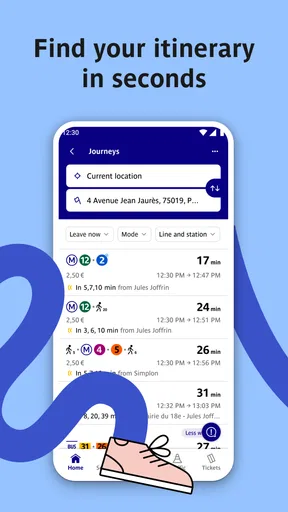
My first meaningful test would be a real journey I expect to take soon, such as getting from my accommodation to a station or a museum. I would enter the destination, compare the suggested connections, and choose the option that feels easiest to follow rather than automatically picking the shortest-looking one. For a first-time rider, fewer confusing changes can be worth more than a small difference in travel time.
Worth Reading Before You Choose

Baby Panda World Brings Quick Play to Modern Phones, but Its Game Library Feels Busy

ESPN’s Live Game View Makes Following Close Games Easier

QuizzLand Review: A Good Fit for Short Trivia Breaks, Not Every Player

Basketball Stars: Multiplayer Is Fast, but Can It Recover When Matches Go Wrong?

WEBTOON Turns Phone Updates Into a Better Reading Routine

Link to Windows Runs on Shared Habits, Not Social Feeds
Before setting off, I would read the route from beginning to end: where to start, which service to board, where to change, and what the final leg looks like. This is particularly useful when the trip moves from metro to RER or bus, because it encourages me to notice the handoff instead of discovering it while rushing through a station. Once I have that plan, I can keep the app available for a check rather than staring at it for the entire ride.
Tickets, alerts and the details worth checking
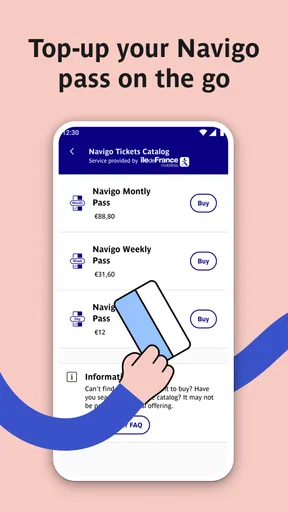
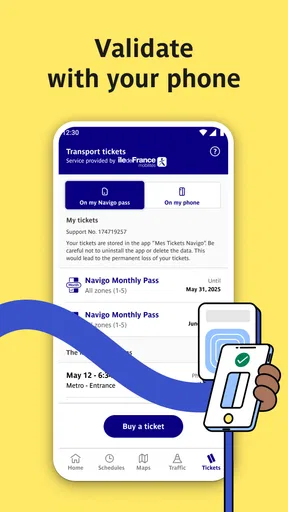
Ticketing is one of the app’s useful draws: it offers a way to buy and store tickets digitally, and it supports contactless payment methods. I would still check the ticket option carefully before relying on it for a particular journey. The practical question is not simply whether a digital ticket is convenient, but whether the ticket I select suits the route and the way I intend to travel. That small pause is better than sorting out a ticket question at the entrance.
Notifications can also help when I regularly use particular lines. Rather than expecting alerts to explain every disruption, I would treat them as a prompt to review my plan. If a service changes, I can reopen the journey and consider another route; if the trip is time-sensitive, I would leave room for uncertainty instead of planning a connection with no margin at all.
Common points of confusion on a first trip
One thing that can trip up a new user is the difference between seeing a route and knowing what to do at a busy interchange. The app can organize the journey, but I still need to follow the station’s signs and confirm that I am heading toward the right platform or direction. I find it helpful to remember the name of the change station and the next service, not just the total journey time.
Another source of confusion is assuming that every suggested option will feel equally simple in practice. A route with several changes may be fine for someone familiar with the network but stressful for a visitor carrying bags or travelling with children. I would compare the whole journey, including the number of handoffs, and choose the one I can follow comfortably. That is a better measure of convenience than speed alone.
Bonjour RATP is not the right sole tool for someone who wants a broad walking guide, a complete city itinerary, or turn-by-turn navigation for driving. A general map app may be better for exploring streets and combining shops or landmarks with walking directions. For a trip centered on public transport across the region, however, a dedicated transit planner can be more useful than piecing together modes in a general-purpose map.
Getting Around with Bonjour RATP
Let's dive into the core of what Bonjour RATP offers. At its heart, this app is all about simplifying your travel experience in the city of lights. The app covers everything from buses and metros to trams and RER lines. It's like having a personal Parisian guide right in your pocket.
Features That Stand Out
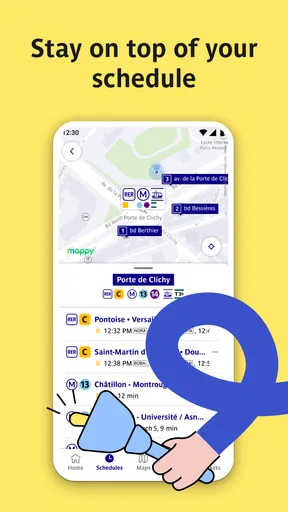
The first thing you'll notice when you open the app is its clean and user-friendly interface. It’s not just about looks, though; it’s about functionality. You can easily check real-time schedules, which is a lifesaver during rush hour. No more wondering when the next train will arrive; Bonjour RATP has got you covered.
Another cool feature is the route planner. Whether you're a tourist trying to find the quickest way to the Eiffel Tower or a local looking to beat the traffic, the app provides multiple options to get you where you need to go. Just type in your destination, and voila, you’re given several routes complete with travel times and connections.
Ticketing Made Easy
One of the standout features is the integrated ticketing system. Gone are the days of fumbling with paper tickets or scrambling for change. With Bonjour RATP, you can purchase and store your tickets directly in the app. This feature is a game-changer, especially if you’re in a hurry or just prefer a digital option.
Plus, the app supports contactless payment methods, making it even more convenient. Just tap and go, and you’re on your way to exploring the city.
Personalized Experience
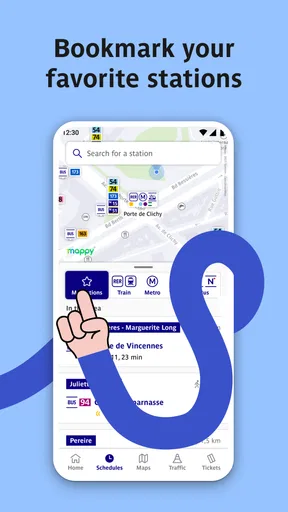
Bonjour RATP doesn’t just stop at schedules and tickets. The app offers personalized notifications to keep you informed about your favorite lines. Whether there’s a delay or a change in service, you’ll get an alert directly on your phone. It feels like having a personal assistant who’s always looking out for your commute.
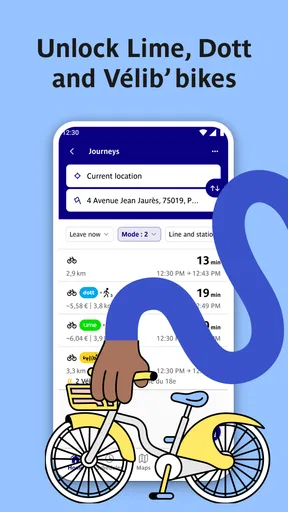
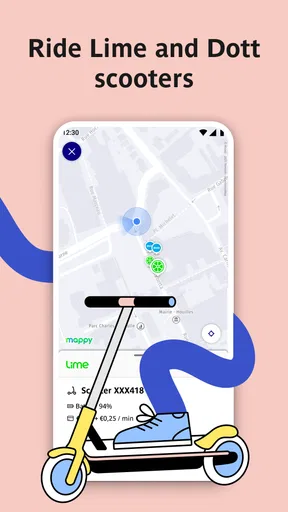
And for those who love cycling, the app includes a section for bike-sharing services available in Paris. So if you’re in the mood for a scenic ride along the Seine, you can easily find the nearest bike station.
Room for Improvement?
Of course, no app is perfect. While Bonjour RATP does a fantastic job overall, there are times when the real-time updates can lag a bit, especially during peak hours. It’s a minor hiccup, but something to be aware of if you're relying on precise timing.
Another point to consider is the navigation within the app. While it's generally intuitive, first-time users might find themselves clicking around a bit to find all the features. But once you get the hang of it, it's smooth sailing.
Choosing it for the trip you actually have
For a typical day, I would use the app in short bursts: plan a route before leaving, check a line if something changes, and confirm the return trip when I know where I will finish. That workflow is more useful than repeatedly refreshing a journey while everything is running normally. It also keeps me alert to the surroundings, which matters in crowded stations where a missed sign can be more consequential than a missed screen update.
Consider a visitor heading across Paris for an afternoon appointment. They can check a route in advance, note the interchange, and decide whether a bus connection looks easier than changing trains. If the first service is delayed, a second route gives them a basis for choosing what to do next. I would still allow extra time for finding the correct platform and navigating a station I do not know; an app can suggest the path, but it cannot remove the friction of an unfamiliar place.
For a commuter, the useful habit is different. I would follow the lines I use often so relevant service alerts can help me reconsider the usual trip. If the normal route is affected, I can compare alternatives before leaving rather than make the decision at the platform. Alerts are most valuable as an early nudge, not as a guarantee that every disruption will be resolved for me automatically.
Where it fits beside maps and other tools
Compared with a general map app, Bonjour RATP is the more natural first stop when the journey depends on public transport in Île-de-France. Its regional focus makes it easier to think in terms of connected transit services instead of treating a station as just another point on a street map. A general map remains handy for the walk to a station, finding a nearby café, or building a day around several non-transit stops; I would use the two for different jobs rather than insist on choosing only one.
It is also worth remembering that a route planner and a live travel companion have different strengths. Planning helps me choose a sensible route before I leave. Live information can help me respond when the day does not match the plan, though updates may occasionally lag, especially at busy times. When timing is critical, I would check again near departure and use station information as a second reference rather than assuming the first estimate will hold.
The app is a good fit for residents who regularly combine metro, RER, Transilien and bus travel, and for visitors willing to spend a few minutes learning the layout. It is less compelling if I only need a one-off walking route, prefer to avoid digital ticketing, or want a tool built around driving and broad city discovery. In those cases, another map or a physical ticket may better suit the task. The right choice depends on whether regional transit is the main problem I am trying to solve.
A calmer way to handle changes
One small but useful habit is to save mental attention for the parts of a trip where mistakes are easiest: the transfer and the final approach. I would check the next service and the change station before boarding, then look up again when I reach the interchange. That is less distracting than consulting the phone at every stop, and it gives me a chance to spot a change in the plan while I still have options.
If I am travelling with someone unfamiliar with Paris, I would share the route in plain terms as we go: the service name, the station where we change, and the stop where we get off. That makes the app a planning aid for the group instead of a screen only one person understands. On a return journey, I would search from the actual place I finish rather than assume the outward route will work equally well in reverse.
For digital tickets, I would make the purchase decision before reaching a crowded gate and take a moment to understand how the ticket is stored in the app. This is a simple workflow improvement, not a reason to assume every fare question disappears. If I am unsure whether a particular ticket matches the trip, I would resolve that before travelling instead of treating the route result as proof of ticket validity.
The Final Word
All in all, Bonjour RATP is a must-have for anyone navigating Paris. Whether you're a local or just visiting, the app provides everything you need to make your travel experience as seamless as possible. From real-time updates to easy ticketing and personalized alerts, it covers all the bases.
So next time you find yourself in the city, give Bonjour RATP a try. It might just become your favorite travel companion, making your Parisian adventures that much more enjoyable.
My recommendation is to begin with one familiar journey, learn how the app presents the connection, and only then rely on it for a more complicated day across the region. Released in 2010, it has developed into a well-established transit option, while the current 9.11.0 version remains the one to look for on a compatible Android device. I see its strongest value in the combination of route planning, service awareness and ticketing within a regional transport context—not in promises that travel will always be effortless.
If you want a straightforward way to think through public-transport trips around Île-de-France, I would give it a place on my phone. I would pair it with common sense at stations, allow time for changes, and keep a general map handy for exploring on foot. Used that way, it can take much of the uncertainty out of getting from one part of the region to another without pretending that an app can make every journey perfectly predictable.
Pros
- Real-time updates for accurate commute planning.
- User-friendly interface with intuitive design.
- Multi-modal transport options in one app.
- Customizable notifications for personal routes.
- Offline maps for convenient navigation.
Cons
- Limited language support beyond French.
- Occasional inaccuracies in time estimates.
- High battery usage during prolonged use.
- Some features require a stable internet connection.
- Advertisements can be intrusive at times.
FAQs for Bonjour RATP
What is Bonjour RATP and how does it work?
Bonjour RATP is a mobile application designed to help users navigate public transportation in the Paris region. The app provides real-time information on metro, bus, tram, and RER schedules. Users can plan routes, check for service disruptions, and receive alerts tailored to their daily commutes. The app's interface is user-friendly, making it simple for both locals and tourists to find the fastest and most efficient travel options.
Is Bonjour RATP available for both Android and iOS devices?
Yes, Bonjour RATP is available for download on both Android and iOS platforms. Users can find it on the Google Play Store for Android devices and the Apple App Store for iOS devices. The app is regularly updated to ensure compatibility with the latest operating systems and to introduce new features and improvements.
Does Bonjour RATP require an internet connection to function?
While Bonjour RATP can display some previously downloaded data offline, a stable internet connection is recommended for optimal performance. Real-time updates, including live schedules and service disruptions, require connectivity. Having access to the internet ensures you receive the most accurate and up-to-date travel information.
Can I use Bonjour RATP to purchase transit tickets?
Yes, Bonjour RATP allows users to purchase transit tickets directly through the app. It supports various payment methods, providing a convenient way to access public transportation without needing physical tickets. This feature is especially beneficial for tourists and those who prefer digital transactions over cash.
How reliable is the real-time information provided by Bonjour RATP?
Bonjour RATP offers highly reliable real-time information, sourced directly from RATP's network. The app is designed to provide accurate updates on schedules, delays, and service disruptions. However, as with any real-time system, unforeseen technical issues can occasionally affect data accuracy. Regular updates aim to minimize such occurrences.


